Vacuum wastewater systems in buildings
Building
650+ projects
world wide
Introduction
Qua-vac has been a specialist in sustainable vacuum sewer systems and water-saving vacuum wastewater systems for graywater, blackwater, and condensate for over 50 years. We provide solutions for both existing and new buildings, with a focus on supermarkets (retail), healthcare, commercial buildings, residential construction, and mobile applications. In addition to vacuum sewer systems, we also supply vacuum toilets. Vacuum sewer systems offer design flexibility, lower costs, water savings, and improved hygiene.
How vacuum wastewater systems works in buildings
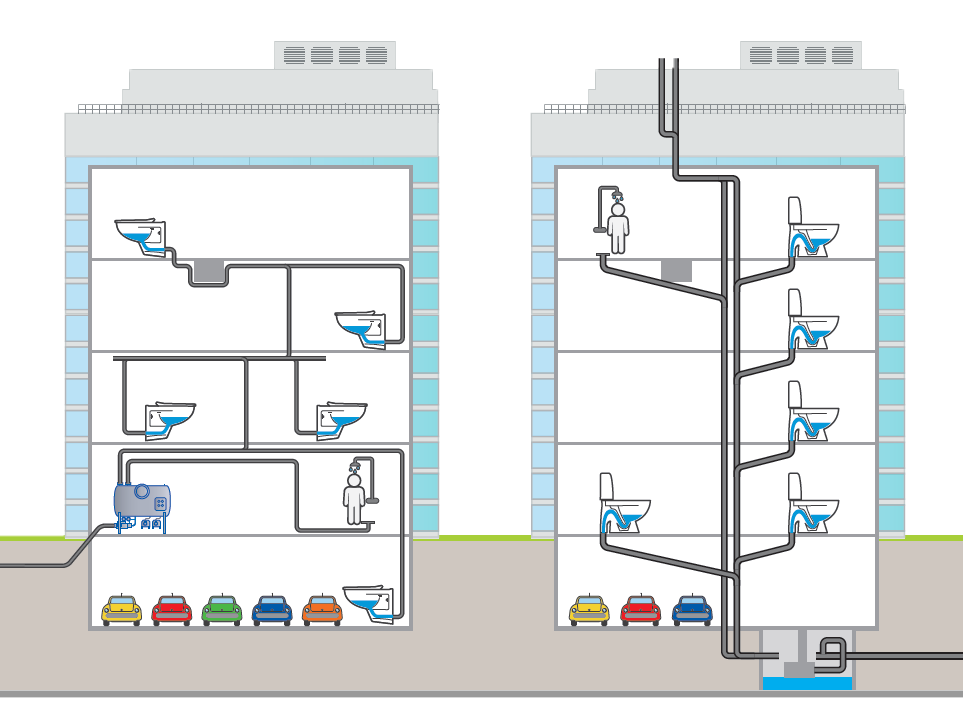
In a vacuum sewer system, wastewater and condensate are transported through small pipes using negative pressure, rather than by gravity. This eliminates the need for a continuous slope, allowing pipes to be routed freely -along or around obstacles, and even upward. This makes it easy to relocate or modify wet areas without major civil engineering work; the system is also quiet, hygienic, and reliable.
At the site or district level, vacuum sewer systems can be integrated with the Vacuflow® system, while Vaculink® enables 24/7 remote monitoring of installations for safe and efficient management.
Projects
Sustainable project
overview

Retail
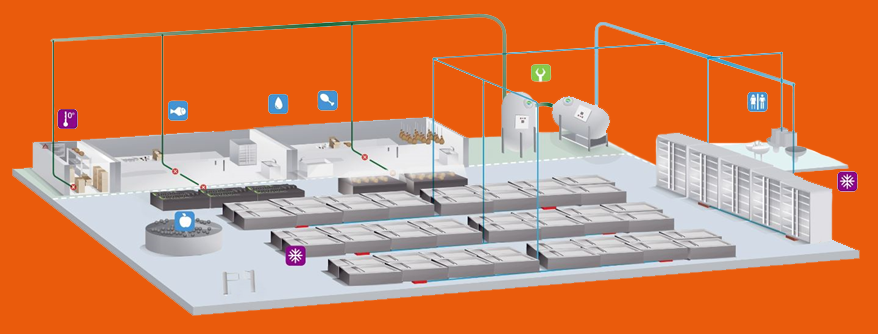
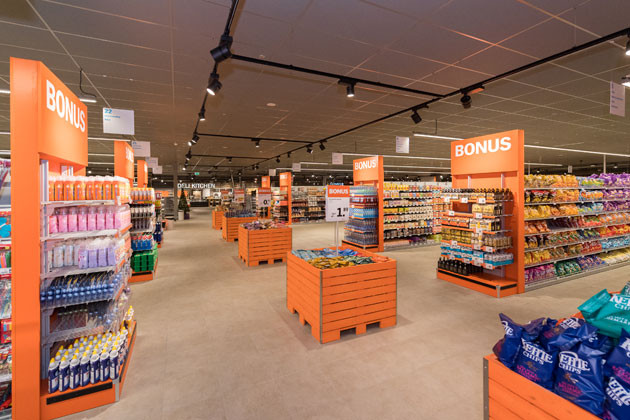
With a vacuum wastewater system, supermarkets and department stores benefit from short turnaround times, minimal disruption, and maximum flexibility in store layout. Condensate from refrigeration units is drained via narrow pipes above or along the ceiling, allowing refrigeration units and checkout islands to be temporarily relocated and modifications to often take place at night or on weekends. Because less demolition work is required and smaller pipes are used, the total renovation costs are lower than with traditional renovations, without store closures or prolonged disruption.
Healthcare
Vacuum sewer systems and vacuum toilets are ideal for hospitals and laboratories, where hygiene and reliability are crucial. The closed system minimizes the risk of odors and leaks and ensures predictable, controlled waste disposal, which is particularly important in sensitive departments such as oncology and laboratories. Installations can be carried out in phases by department or building wing, with limited downtime and, if necessary, redundancy to ensure continuity. Remote monitoring allows for the rapid detection of malfunctions and enables scheduled maintenance, contributing to safe and stable operations.


Utility
In offices, schools, and public buildings, vacuum drainage systems make it easy to relocate wet areas during renovations and to install long horizontal piping runs. The system also works with level differences, such as split levels, baseboards, and existing shafts, without requiring major modifications. This allows renovations to be carried out faster and cleaner, which, especially in high-traffic locations, ensures minimal disruption and shorter turnaround times.
Residential development
Vacuum toilets are well-suited to modern sanitation systems due to their low water consumption, compact piping, and minimal structural penetrations. They are suitable for single-family homes and residential buildings, whether in new construction or renovation projects, and offer the same level of comfort as conventional plumbing systems. At the same time, the system provides a solid foundation for future water separation and reuse, addressing the issue of increasing water scarcity.


Mobile
Vacuum toilets are ideal for events, temporary housing, healthcare units, and construction sites, where flexibility and reliability are key. The systems can be quickly set up and taken down, connected via plug-and-play to a central vacuum station or tank, and have a minimal logistical impact due to their low water consumption. Thanks to their scalability, the systems continue to function efficiently even at peak capacity, without any interruptions in service.
Renovation
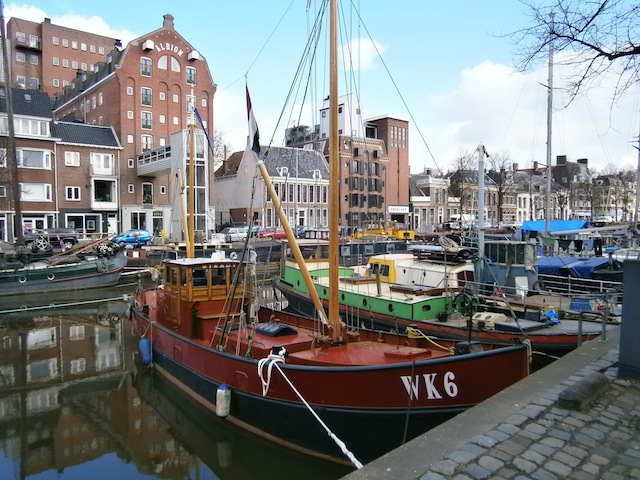
With vacuum wastewater systems, historic buildings, retail spaces, and offices can be renovated with minimal demolition work. Thanks to narrow pipe runs, drilling instead of demolition, and the ability to work around floor slabs and beams, historic and structural elements are preserved. Furthermore, the work can be carried out in phases by floor or zone, allowing business operations to continue during the renovation.


Safety in the workplace
We support our customers and our network of distributors with parts, training, and technical support. Genuine Vacuflow® and Evac parts are well-stocked and can be delivered quickly. Vaculink® is an online tool that allows you to monitor your vacuum station remotely. This helps you detect malfunctions faster, plan maintenance more effectively, and save costs. We also offer service contracts for preventive and corrective maintenance, with clear terms and conditions.
Works on the construction site and on the drawing board
Vacuflow® provides a proven foundation for efficient and sustainable vacuum sewer systems in buildings and on sites. The system is low-maintenance, easily scalable in phases or expansions, and is supported by comprehensive technical documentation for design and construction teams. Incorporate Vacuflow® early in the design process to accelerate decision-making and minimize construction and operating costs.
Working together to find the best solution for your building
Would you like to learn more about our vacuum solutions? Please contact us to schedule a meeting. Our specialists are happy to work with you to develop a sustainable, water-saving, and future-proof solution.
Frequently Asked Questions about vacuum systems in buildings
Vacuum systems are more flexible, quieter, and easier to maintain than traditional sewer systems.
Yes, this is possible because the pipes are easy to relocate. Since you don’t have to rely on existing floor drains, installation is less expensive than with a traditional renovation and causes minimal disruption.
There is a drip tray located beneath every refrigeration or freezer unit. As soon as enough condensate has collected in the tray, the vacuum system is automatically activated and the condensate is drained through thin pipes to a central vacuum unit. These pipes usually run through the ceiling, eliminating the need to break open floors. This makes it easy for supermarkets to connect new refrigeration or freezer units, often within a single evening and without closing the store.
Vacuflow® can be flexibly connected to an existing on-site sewer system or operate as a standalone vacuum system. Connection requires sufficient sewer capacity, accessible connection points, space for the vacuum station, and a power supply. Thanks to its modular and scalable design, you can easily add additional toilets or drain points and expand the vacuum station as capacity grows. This makes Vacuflow® ideally suited for renovations, expansions, and future-proof buildings.
Expand your Vacuflow® system with Vaculink®, the online sewer management tool that allows you to monitor the vacuum station remotely. You can customize Vaculink® to your needs; the information is always up to date and accessible 24/7. Set up SMS and email alerts to receive immediate notifications in the event of a malfunction. This way, you have insight into your system anytime, anywhere.
News